Items filtered by date: February 2026
Plantar Warts Can Be Treated!

Plantar warts are small growths that develop on parts of the feet that bear weight. They're typically found on the bottom of the foot. Don't live with plantar warts, and call us today!
Surgery and Relief From Morton’s Neuroma

Morton’s neuroma occurs when tissue surrounding a nerve between the toes becomes thickened, leading to burning pain, tingling, or a feeling of walking on a small object. When conservative measures such as shoe modification, orthotics, activity changes, or injections fail to provide relief, surgical intervention may be considered. The procedure is designed to reduce pressure on the irritated nerve or remove the affected nerve segment, depending on the individual case and severity of symptoms. Surgery is usually performed on an outpatient basis and often allows for a gradual return to walking with protective footwear. Healing time varies, but many patients experience meaningful improvement as inflammation resolves. Some numbness between the toes can occur following nerve removal and is considered during treatment planning. When forefoot pain continues to interfere with comfort and mobility, it is suggested that you seek evaluation by a podiatrist to help determine appropriate next steps, which may include surgery.
Foot surgery is sometimes necessary to treat a foot ailment. To learn more, contact Elliot T. Udell, DPM of New York. Our doctor will assist you with all of your foot and ankle needs.
When Is Surgery Necessary?
Foot and ankle surgery is generally reserved for cases in which less invasive, conservative procedures have failed to alleviate the problem. Some of the cases in which surgery may be necessary include:
- Removing foot deformities like bunions and bone spurs
- Severe arthritis that has caused bone issues
- Cosmetic reconstruction
What Types of Surgery Are There?
The type of surgery you receive will depend on the nature of the problem you have. Some of the possible surgeries include:
- Bunionectomy for painful bunions
- Surgical fusion for realignment of bones
- Neuropathy decompression surgery to treat nerve damage
Benefits of Surgery
Although surgery is usually a last resort, it can provide more complete pain relief compared to non-surgical methods and may allow you to finally resume full activity.
Surgical techniques have also become increasingly sophisticated. Techniques like endoscopic surgery allow for smaller incisions and faster recovery times.
If you have any questions, please feel free to contact our office located in Hicksville, NY . We offer the newest diagnostic and treatment technologies for all your foot care needs.
Causes and Symptoms of Ankle Instability

Ankle instability refers to a recurring sense of weakness that makes the ankle feel unreliable during walking or activity. One cause of ankle instability is previous ankle sprains that damaged ligaments on the outer or inner side of the ankle. High arches or flat feet can also alter weight distribution and place added strain on stabilizing tissues. Muscle weakness, poor coordination, or nerve-related conditions may interfere with the body’s ability to respond quickly to uneven surfaces. In some cases, arthritis, scar tissue, or loose joint structures contribute to ongoing instability. A podiatrist can evaluate ankle alignment, ligament integrity, and gait mechanics to determine the underlying cause. Treatment may involve bracing, targeted exercises, footwear guidance, or advanced care to restore stability and reduce the risk of further injury. If it feels like your ankle is "giving way," it is suggested that you make an appointment with a podiatrist for an exam, diagnosis, and treatment.
Ankle pain can be caused by a number of problems and may be potentially serious. If you have ankle pain, consult with Elliot T. Udell, DPM from New York. Our doctor will assess your condition and provide you with quality foot and ankle treatment.
Ankle pain is any condition that causes pain in the ankle. Due to the fact that the ankle consists of tendons, muscles, bones, and ligaments, ankle pain can come from a number of different conditions.
Causes
The most common causes of ankle pain include:
- Types of arthritis (rheumatoid, osteoarthritis, and gout)
- Ankle sprains
- Broken ankles
- Achilles tendonitis
- Achilles tendon rupture
- Stress fractures
- Bursitis
- Tarsal tunnel syndrome
- Plantar fasciitis
Symptoms
Symptoms of ankle injury vary based upon the condition. Pain may include general pain and discomfort, swelling, aching, redness, bruising, burning or stabbing sensations, and/or loss of sensation.
Diagnosis
Due to the wide variety of potential causes of ankle pain, podiatrists will utilize a number of different methods to properly diagnose ankle pain. This can include asking for personal and family medical histories and of any recent injuries. Further diagnosis may include sensation tests, a physical examination, and potentially x-rays or other imaging tests.
Treatment
Just as the range of causes varies widely, so do treatments. Some more common treatments are rest, ice packs, keeping pressure off the foot, orthotics and braces, medication for inflammation and pain, and surgery.
If you have any questions please feel free to contact our office located in Hicksville, NY . We offer the newest diagnostic tools and technology to treat your foot and ankle needs.
Athlete’s Foot and How to Protect Your Feet
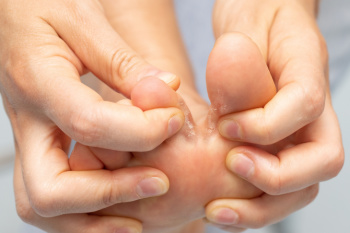
Athlete’s foot, known medically as tinea pedis, is a common fungal infection that affects the skin between the toes and along the foot. It is especially prevalent among football players due to warm, moist environments inside cleats and frequent shared locker room spaces. Symptoms often include itching, burning, peeling skin, and a persistent rash. The condition develops when fungus thrives on damp skin, often worsened by sweat, wearing tight footwear, or walking barefoot in communal areas. A podiatrist can diagnose the infection, recommend effective antifungal treatments, and provide guidance on prevention to stop it from returning. If you have symptoms of athlete’s foot, it is suggested that you schedule a visit with a podiatrist for effective relief, treatment and prevention tips.
Athlete’s foot is an inconvenient condition that can be easily reduced with the proper treatment. If you have any concerns about your feet and ankles, contact Elliot T. Udell, DPM from New York. Our doctor will treat your foot and ankle needs.
Athlete’s Foot: The Sole Story
Athlete's foot, also known as tinea pedis, can be an extremely contagious foot infection. It is commonly contracted in public changing areas and bathrooms, dormitory style living quarters, around locker rooms and public swimming pools, or anywhere your feet often come into contact with other people.
Solutions to Combat Athlete’s Foot
- Hydrate your feet by using lotion
- Exfoliate
- Buff off nails
- Use of anti-fungal products
- Examine your feet and visit your doctor if any suspicious blisters or cuts develop
Athlete’s foot can cause many irritating symptoms such as dry and flaking skin, itching, and redness. Some more severe symptoms can include bleeding and cracked skin, intense itching and burning, and even pain when walking. In the worst cases, Athlete’s foot can cause blistering as well. Speak to your podiatrist for a better understanding of the different causes of Athlete’s foot, as well as help in determining which treatment options are best for you.
If you have any questions please feel free to contact our office located in Hicksville, NY . We offer the newest diagnostic and treatment technologies for all your foot and ankle needs.
Clubfoot Causes and Care
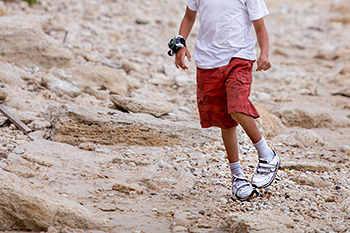
Clubfoot is a common birth defect in which a baby is born with one or both feet turned inward and downward due to abnormal development of muscles, ligaments, and bones. The exact causes are not always known, but may include genetic factors and differences in fetal development during pregnancy. The Ponseti treatment method is the most widely used approach for care and involves gentle stretching, casting, and bracing to gradually correct foot position and function. A podiatrist plays an important role in monitoring foot development, guiding treatment, and supporting long-term mobility and comfort. Early care leads to the best outcomes. If your child has been born with clubfoot, it is strongly suggested that you have a podiatrist on your healthcare team who can provide effective treatment and compassionate guidance.
Congenital foot problems require immediate attention to avoid future complications. If you have any concerns, contact Elliot T. Udell, DPM of New York. Our doctor can provide the care you need to keep you pain-free and on your feet.
Congenital foot problems are deformities affecting the feet, toes, and/or ankles that children are born with. Some of these conditions have a genetic cause while others just happen. Some specific foot ailments that children may be born with include clubfeet, polydactyly/macrodactyly, and cleft foot. There are several other foot anomalies that can occur congenitally. What all of these conditions have in common is that a child may experience difficulty walking or performing everyday activities, as well as trouble finding footwear that fits their foot deformity. Some of these conditions are more serious than others. Consulting with a podiatrist as early as possible will help in properly diagnosing a child’s foot condition while getting the necessary treatment underway.
What are Causes of Congenital Foot Problem?
A congenital foot problem is one that happens to a child at birth. These conditions can be caused by a genetic predisposition, developmental or positional abnormalities during gestation, or with no known cause.
What are Symptoms of Congenital Foot Problems?
Symptoms vary by the congenital condition. Symptoms may consist of the following:
- Clubfoot, where tendons are shortened, bones are shaped differently, and the Achilles tendon is tight, causing the foot to point in and down. It is also possible for the soles of the feet to face each other.
- Polydactyly, which usually consists of a nubbin or small lump of tissue without a bone, a toe that is partially formed but has no joints, or an extra toe.
- Vertical talus, where the talus bone forms in the wrong position causing other bones in the foot to line up improperly, the front of the foot to point up, and the bottom of the foot to stiffen, with no arch, and to curve out.
- Tarsal coalition, when there is an abnormal connection of two or more bones in the foot leading to severe, rigid flatfoot.
- Cleft foot, where there are missing toes, a V-shaped cleft, and other anatomical differences.
- Macrodactyly, when the toes are abnormally large due to overgrowth of the underlying bone or soft tissue.
Treatment and Prevention
While there is nothing one can do to prevent congenital foot problems, raising awareness and receiving neonatal screenings are important. Early detection by taking your child to a podiatrist leads to the best outcome possible.
If you have any questions, please feel free to contact our office located in Hicksville, NY . We offer the newest diagnostic and treatment technologies for all your foot care needs.
